Power Plant and National Electrical Grid 2008-2009
Mega-project or mega-problem? Plantasaun Eletrisidade no Rede Eletrisidade Nasional 2008-2009
Projeito boot ka Problema boot? This page includes information from 2008-2009, some of which is outdated.
Click here for more information from 2010 or since 2011. Pajina ida ne'e inklui informasaun husi tinan 2008-2009, balu tuan liu.
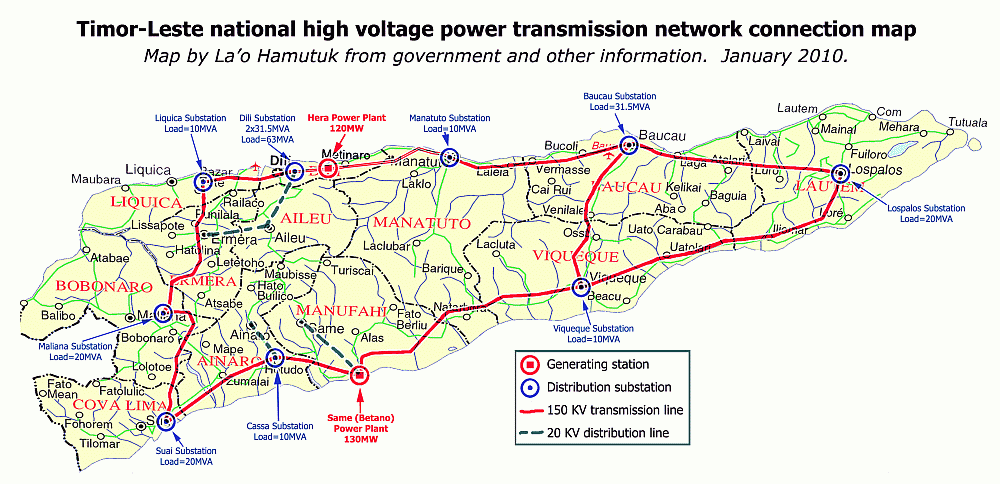
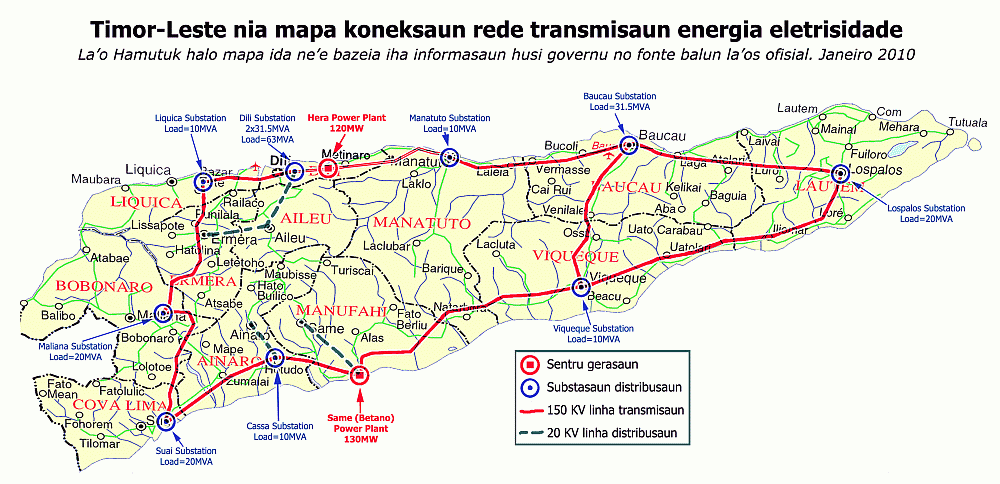
Click iha ne'e atu hetan informasaun husi 2010 ka dezde 2011. Work suspended in September 2009--see below. Servisu hapara iha fulan Setembru--hare'e kraik. Project redefined in November 2009--see below. Alterasaun boot iha fulan Novembru--hare'e kraik. Updated 26 September 2011 | Atualiza iha 28 Setembru 2011 | | Timor-Leste will pay nearly $400 million to a Chinese company to build three electric power generating stations using heavy fuel oil (residual) and a nationwide high voltage distribution system. The power plants are based on old engines and generators which have been used in China for more than two decades. This is highly-polluting, difficult-to-manage technology which most countries are moving away from or have already stopped using. It creates acid rain, water pollution, toxic solid waste, particulate air pollution, and greenhouse gas emissions. In addition to environmental and reliability concerns about this project, information has been difficult to obtain and rumors abound about irregularities in the contracting, budgeting and other processes. Construction began in February 2009 at the first site in Hera, with the stated goal of providing continuous electricity to all districts by the end of the year. By mid-year it was clear that the target would not be met, work was suspended in September, and major changes are being made to the project design in November. Click here to skip to sections below on: | Timor-Leste sei selu besik tokon $400 ba kompanha Xineza ida atu hari’i sentral eletrika tolu ne’ebe sei uza oleu pezadu (residu) no rede nasional ho voltaje alto. Sentral eletrika ne’e sei uza makina no jerador tuan ne'ebe uza tiha ona durante dekadu rua nia laran iha Xina. Sentral ne'e hamosu polusaun makaas, difisil atu jere teknolojia ne'ebe nasaun barak husik hela ona ka la uza ona. Sentral ne'e sei hamosu udan asidu, polusaun bee, foer venenu solidu, polusaun husi material ba anin. no emisaun gas estufa. Aleinde ba preokupasaun ambiental no konfiabilidade kona-ba projeitu ne'e, susar atu hetan informasaun no rumoris barak mosu kona-ba iregularidade kontratu, orsamentu no prosesu sira seluk. Konstruksaun hahu iha fulan Fevereiru 2009 iha fatin primeiru iha Hera, ho objektivu atu fo eletrisidade ba distritu tomak molok tinan 2009 nia rohan. Too tinan klaran, hatudu momos katak tarjetu ne'e sei labele atinje, servisu hapara iha Setembru, no alterasaun boot halo dadaun ba desenho projeitu iha Novembru. Click (hili) iha pajina web site ida ne'e. Click atu hare seksaun kona-ba: | Click on map to see it larger in English. 
Click here for updated map, January 2010 | Click mapa ida ne'e atu haree boot liu iha Tetum. 
Clika iha ne'e ba mapa foun liu, revista iha Janeiro 2010 | Documents and links | Dokumentu no ligasaun sira | History On 17 June 2008, the Ministry of Finance posted an “Invitation to Submit Expression of Interest and Proposal” on its website, with a deadline for submitting proposals of 4 July, less than three weeks later. Because of the short timeframe, we believe that the Government already knew who would get the project, and conducted an open tender only as a formality. The project, “Construction of Nationwide Electrical Power Grid and Power Plant and its Facilities” is by far the largest project ever undertaken in Timor-Leste, nearly $400 million dollars, roughly a year of Timor-Leste's non-oil GDP. It is ten times more expensive than any contract the Government has ever awarded. On 23 June 2008, the Prime Minister presented a Budget Rectification law to parliament which includes $105 million for infrastructure for electricity production and $285 million for distribution to be spent between 2008 and 2011. The project was specified as two heavy oil power plants, totaling 180 megawatts (MW), far more than the total anticipated electricity needs for Timor-Leste for the next 20 years. According to the 2004 ADB Power Sector Development Plan, peak power demand in Timor-Leste in 2002 was 18.6 MW, with a target of 109 MW by 2025. That report also said “Coal-/oil-fired steam power generation, offshore gas and nuclear power are all large-scale options, and are not considered feasible for Timor-Leste, which has a relatively small power system.” If they work, the heavy oil plants would make the proposed Iralalaro and recently completed Gariwai hydroelectric plants unnecessary, as well as other projects and proposals for agrofuel, biogas, hydroelectric, gas seep, wind and other alternative energy power sources. It will not use oil and gas found in Timor-Leste and the Timor Sea, but would run entirely on imported fuel. | Istoria Iha loron 17 fulan Junhu 2008, Ministeiru Finansas anunsia iha website kona-ba "Konvite Atu Hatama Expresaun Interese Nian No Proposta" ho tempo ne’ebé determina hodi hatama proposta maka loron 4 fulan Julhu, menus semana tolu depois. Tamba tempu badak, ami fiar katak governu hatene ona se mak sei hetan projeitu ida ne’e, no buat ne’ebé iha tenderisasaun nia laran ida ne’e hanesan formalitas deit.Projeitu “Konstrusaun ba Rede no Linha Eletrisidade Nasional no Planta no Fasilidade Eletrisidade” nian ida ne’e sai projeitu ne’ebé bo’ot liu ne’ebé sei tau iha Timor-Leste, estimatizasaun orsamentu ne’ebé atu aloka tokon $300-$500 dolares Amerikanu. Nia kapasidade karun liu fali ho kontratu ne’ebé Governu hetan tiha ona. Iha loron 23 fulan Junhu 2008, Primeiru Ministru aprezenta lei Orsamentu Rectifikativu ba Parlamentu Nasional ne’ebé inklui tokon $105 ba infrastrutura produsaun eletrisidade no tokon $285 ba distribuisaun atu bele gasta entre 2008 no 2011. Projeitu ne’e inklui ho plantasaun eletrisidade oleu pezadu rua, hodi fornese hamutuk 180 megawatts (MW), dook liu husi total nesesidade ba eletrisidade ne’ebé antisipa ba Timor Leste ba tinan 20 oin mai. Tuir Planu Dezenvolvimentu Seitor Eletrisidade ADB (Banku Dezenvolvimentu Asia nian) 2004 nian, kapasidade eletrisidade maximu ne’ebé Timor-Leste hakarak iha 2002 maka 18.6 MW, ho tarjeitu 109 MW iha tinan 2025. Relatorio ida ne'e mos hateten katak "Gerasaun eletrisidade husi (uap-indo) manas fatuk metan-no mina, gas iha tasi laran no nuklear sai opsaun ho skala ne’ebé bo’ot, no la konsidera atu bele halo iha Timor-Leste, ne’ebé ho sistema eletrisidade ne’ebé relatif kiik."Karik planta rua ne’e mak la'o, plantasaun mina todan bele halo plantasaun hidro eletrisidade iha Iralalaro no Gariuai sai la importante, hanesan mos projeitu seluk no proposta ba agrofuel, biogas, hidroeletrisidade, gas ne’ebé sai, anin no rekursu ba energia eletrisidade alternativu sira seluk. Ida ne’e sei la uza mina no gas ne’ebé hetan iha Timor-Leste no Tasi Timor, maibe sei halai liu ba petroleum ne’ebé importa mai husi rai seluk. | Heavy Fuel Oil
(abridged from Wikipedia) Residual fuel oil is so viscous that it has to be heated with a special heating system before use and it contains relatively high amounts of pollutants, particularly sulfur. However, its undesirable properties make it very cheap. Residual fuel oil cannot be used in road vehicles or small ships, but power plants and large ships are able to use residual fuel oil. Residual fuel oil was used more frequently in the past, and its use in electricity generation has also decreased. In 1973, residual fuel oil produced 16.8% of the electricity in the United States. By 1983, it had fallen to 6.2%, and as of 2005, electricity production from all forms of petroleum, including diesel and residual fuel, is only 3% of total production. The decline is the result of price competition with natural gas and environmental restrictions on emissions. For power plants, the costs of heating the oil, extra pollution control and additional maintenance required after burning it often outweigh the low cost of the fuel. Burning residual fuel oil produces much darker smoke than natural gas, which affects the perception of the plant by the community. Most of the facilities which historically burned No. 6 or other residual oils were constructed in the early or mid 20th century, or switched from coal to oil fuel during the same period. In either case, residual oil was seen as a good prospect because it was cheap and readily available, even though it provided less energy per litre than lighter fuels. Most of these facilities have subsequently been closed and demolished, or have replaced their fuel supplies with a simpler one. The high sulfur content of No. 6 oil -- up to 3% by weight in some extreme cases-- had a corrosive effect on many heating systems (which were usually designed without adequate corrosion protection in mind), shortening their lifespans and increasing the polluting effects. |
The project includes a “Transmission line network covering the whole country,” with no specifics as to whether it goes only to a few large cities or to every aldeia, or what coverage there should be within towns. The contractor must “complete the whole project, from design to commissioning, of power plants and transmission lines within one year after the signing of the Contract Agreement,” which was anticipated for 25 July 2008, but didn't happen until October. It is essentially impossible for a project of this magnitude to be done with any quality in this timeframe. On the other hand, the payments for the project would be spread out over a period of three years. These power plants will burn “heavy oil,” also known as “heavy fuel oil,” “residual fuel oil” or “No. 6.” This is the carcinogenic residue left over from refining crude oil after gasoline, diesel and other lighter fractions have been removed. It is an extremely dirty technology, already phased out in many countries for environmental reasons, and burning it emits large amounts of sulfur, fly ash, carbon dioxide and other pollutants, creating both solid and gaseous toxic waste. Its use would undercut Timor-Leste’s recent signing of the Kyoto Protocol, which commits this nation to address climate change. The Invitation does not specify that the power plants must be new, and we have learned that this is 20-year-old used equipment that might otherwise be scrap. The proposed July 2008 mid-year rectification budget included $105 million over four years for the two power plants, significantly lower than the normal price for new ones. (It also includes $285 million for a national grid.) La'o Hamutuk agrees that Timor-Leste needs a national electrical grid and enough power generating capacity to supply the country's needs. However, we believe that this unrealistic project will not meet those objectives. In addition to depleting the country's finances and subverting honest tender procedures, it will block development of more feasible and beneficial alternatives, and damage our environment. La'o Hamutuk has obtained the Proposal by Chinese Nuclear Industry Construction Company 22 for the power plant and electric grid. The project has been somewhat revised since this proposal was written in June 2008, and we do not have the final contract or specifications for the project. However, there will now be three generating centers, with a third having been added in Hera (just east of Dili) to meet the needs of the capital city. In the two weeks after the invitation was first circulated, it was revised twice, listing different people to respond to enquiries. Since June 25, Canadian Michael E. Francino has been listed, replacing Rosa Ribeiro and Ines Almeida. Section 5. Terms of Reference for Legal Advice (excerpts) The Government of Timor Leste requires legal assistance with the development of contract documents for the construction of a nationwide electrical power grid and power plants.... Firms are reminded that the law of Timor Leste is based upon legislation and upon the Civil Code of Indonesia, where law does not otherwise exist. Respondent law firms are required to outline their experience, skills and capabilities in advising governments on the procurement of power stations and electricity grids by EPC, BOT, BOOT and other modalities related electrification projects the business of electricity generation facilities and national power grid management power purchase agreements regulatory advice on electricity generation and distribution financing of power plant/electricity grid projects all aspects of power supply, including risk avoidance strategies, environmental impact assessment and the taking of easements or similar over public and private property
A key element of the contract will comprise the financing arrangements that both parties have negotiated and agreed over the project life. The responses received are based on different funding models. Expert project finance assistance should be engaged by the legal firm to assess financial proposals, and commercial risk, of shortlisted bidders, and assist the Government to negotiate the optimal financial arrangement with the preferred bidder. |
On 19 September, the Ministry of Finance web-posted a Request for Proposals requesting bids to provide "Legal Advice, and development of contract documents for power plants and electricity grid" to be submitted by 29 September 2008. The 82-page RFP contains only three pages of Terms of Reference (excerpted at right); the rest is boilerplate about billing, payments, bidding procedures and the TOR for the power plant project. We do not know if a contract was signed for legal assistance. | Oleu Pezadu
(sumariu husi Wikipedia) Residu husi petroleu (oleu pezadu) ne’e tos oituan (exemplo goma) no bele hamanas ho sistema spesial hamanas nian molok atu uza no ida ne’e iha materia ne’ebé hamosu polusaun ho quantidade ne’ebé relatif bo’ot, liu-liu hanesan Sulfur. Maibe, ida ne'e la presiza propriedade atu halo tamba ne’e baratu. Residu husi mina petroleu nian labele uza ba transporte estrada nian no ro kiik sira, maibe bele uza ba planta eletrisidade no ro ahi bo’ot sira. Residu husi mina petroleu nian uza dala barak ona iha tempu pasadu, no ida ne’e uza ba gerasaun eletrisidade ida ne’ebé atrazadu nian. Iha 1973, residu petroleu nian produs 16.8% eletrisidade iha Estadu Unidos America nian. Husi 1983, tun fali ba 6.2%, no hanesan iha 2005, produsaun eletrisidade ne’ebé mai husi petroleu, inklui diesel no residu (restu) petroleum nian, iha deit 3% husi total produsaun nian. Rezeitasaun ida ne’e mai husi resultadu husi kompetisaun folin gas natureza no limitasaun emisaun ba ambiente nian. Ba planta eletrisidade, kustu ba hamanas mina, kontrolo polusaun extra no manutensaun adisional presiza`duni depois iha prosesu sunu ne’e dala barak bo’ot liu fali kustu kiik husu petroleu nian. Suar sunu nian husi residu produsaun oleu petroleu nian mahar liu compara ho gas nartureza nian, ne'ebe afeita ba persepsaun komunidade nian ba planta. Fasilidade barak ne’ebé hetan sunu istoriamente numeru 6 ou residu oleu seluk ne’ebé konstrui iha primeiru tempu ou tempu klaran sekulu 20 nian, ka muda husi fatuk metan ba iha oleu petroleu durante periode ne’ebé hanesan. Iha kazu seluk, ema hare residu oleu petroleum hanesan prospek ne’ebé diak tamba baratu no fasil atu bele hetan, maske ida ne’e prepara menus energia kada litru kompara ho petroleu lakan. Barak husi fasilidade hirak ne’e depois taka no destroi fali, ka troka fali fornesementu kombustivel ho ida ne'ebe simples no diak liu. Sulfur barak liu mak iha oleu no.6 liu to iha 3% husi todan ne’ebé mai husi kazu ne’ebé diferente, barak husi sistema hamanas nian hetan impakto estragus. (ne’ebé dala barak la hanoin atu kria sein protesaun sae ne'ebe adequate, habadak durasaun moris no hasae impactu polusaun nian. |
Projeitu ne’e inklui ho “Rede ba linha transmisaun” atu haleu nasaun tomak, ho laiha spesifiku hanesan atu aumenta ba iha area vila bo’ot deit ka ou ba aldeia tomak, ka iha distritu laran deit. Kontraktor tenke “kompleta projeitu ne'e tomak, hahu husi dezenhu too iha prosesu dekomisaun nian, husi plantasaun eletrisidade no linha transmisaun iha tinan ida depois asina kontrakto konkordansia nian” ne’ebé antisipa ba loron 25 fulan Julhu 2008, maiba akontese iha Oktubru. Ida ne’e imposivel ba projeitu ida ho kapasidade ida ne’e atu halo ho qualidade iha planu servisu ida ne’e. Iha fatin seluk, pagamentu ba projeitu ida ne’e sei han tempu liu ba periodu tinan tolu nia laran. Plantasaun eletrisidade ida ne’e sei sunu "oleu pezadu” ne’ebé konhesidu hanesan “petroleum mina todan”, "residu oleu petroleum" ka “No.6.” Katak residu karsinogenik husik sai husi fatin hamos/ ta’es mina matak nian depois gasoline, solar no fraksaun material lakan nian hetan mudansa. Ida ne’e hanesan buat teknologia ne’ebé foer tebes, ne’ebé ninia fase/ tempo liu tiha ona iha nasaun barak tamba razaun ambiental, no sunu nia emisaun boot liu ho quantidade husi sulfur, hamosu rai rahun semo, hamosu karbon dioksida no material seluk ne’ebé hamosu polusaun. Planta eletrisidade ne’ebé uza oleu pezadu sei la valoriza prosesu ratifikasaun Timor-Leste foin lalais nee ba Protokolu Kyoto nian, ne’ebé halo nasaun ida ne’e atu fo atensaun ba mudansa klimatika. Iha konvite tenderizasaun la hateten spesifiku katak plantasaun eletrisidade tenke foun, dalaruma iha ema balun ne’ebé koko atu hatama equipamentu uzadu balun iha Timor-Leste ne’ebé bele dalaruma sai foer. Proposta Orsamentu Rektificativu fulan Julhu 2008 inklui tokon $105 durante tinan haat ba planta rua, kiik liu kompara ho presu normal ba ida ne’ebé foun. (Mos inklui tokon $285 ba rede eletrisidade nasional) La’o Hamutuk konkorda katak Timor-Leste presiza rede eletrisidade nasional ida ne’ebé iha kapasidade gerador eletrisidade ne’ebé sufisiente atu fornese nesesidade nasaun nian. maibe, ami fiar katak projetu ida ne’ebé la realistiku sei la hetan ninia objetivu. Iha adisional atu estraga hotu finansa nasaun nian no hamonu honestidade prosedural tenderizasaun nian, sei impede dezenvolvimentu barak ne’ebé atu hala'o benefisiu alternativa seluk no estraga ita-nia ambiente. La'o Hamutuk hetan Proposal husi Komapanha Konstrusaun Industria Nuclear No. 22 ba planta enerjia no rede eletrisidade. Projeitu ne'e parese revista tiha ona hahu dokumentu ne'e hakerek iha Junhu 2008, no ami seidauk iha kontratu final ka sepesifikasaun ba projeitu ne'e. Maibe, iha ona centru eletrifikas tolu ho aumenta ida iha Hera (parte leste husi Dili) hodi suporta necesidade sidade kapital nian. Iha semana rua depois primeiru sirkulasaun konvite nian, hetan revizaun dala rua, lista ema ne’ebé diferente atu responde ba investigasaun. Hahu Junhu 25, ema Canada ho naran Michael E. Francino tau iha lista, hodi troka Rosa Ribeiro no Ines Almeida. Sesaun 5. Termu referensia ba Koncelhu Legal (sumariu) Governu Timor-Leste husu asistensia legal ho dokumentu kontratu dezenvolvimento nian ba konstrusaun rede eletrisidade ba Timor-Leste laran tomak no plantasaun eletrisidade…. Fo hanoin fila fali ba kompanha sira katak lei iha Timor-Leste sei bazeia ba legislasaun no Kodigo Civil Indonesia nian, ne’ebé lei dala ruma la existe. Lei ne’ebé husu ba kompanha sira mak, husu atu hatoo linha geral kona-ba sira nia esperiensia, abilidade no kapasidade wainhira halo koncelhu ba governu hanesan aprovizionamentu stasaun eletrisidade no rede eletrisidade husi EPC, BOT, BOOT no modalidade seluk tan gestaun komersiu ba fasilidade gerador eletrisidade nian rede eletrisidade nasional nian. komprimisio atu fa’an eletrisidade regulatoriu Koncelhu ba gerasaun eletrisidade no distribuisaun finansa ba plantasaun eletrisiade/projeitu rede eletrisidade aspeitu hotu-hotu husi fornesementu eletrisidade, inklui strategia hodi evita risku, analiza impaktu ambiental nian, no garantia hakmatek ba propriedade publiku ka privadu nian hotu
Elementu importante husi kontratu maka planu finanseiru katak parte rua ne’e iha ona negosiasaun no konkordansia durante projeitu ne’e la'o. Resposta ne’ebé hetan bazeia ba modelu prepara fundus ne’ebé la hanesan. Asistensia peritu finansa ba projeitu tenke hetan informasaun husi legal Kompanha nian atu bele hetan asesu ba proposta finansial nian, no risku komersial, husi lista badak ema ne’ebé hakarak, no asiste governu atu halo negosiasaun ba planu financial ne’ebé optimal ho ema prefere ne’ebé hakarak |
Iha loron 19 fulan Setembru, web site Ministeriu Finansas anunsia Requerementu ba Proposta husu hakarak atu prepara “Koncelho Legal, no documentu kontratu sira ba plantasaun eletrisidade no rede eletrisidade” atu bele hatama iha 29 setembru 2008. Husi pagina RFP 82 so iha deit pagina tolu husi Termu Referensia nian (sumariu iha liman los), seluk tan kona-ba osan, pagamentu, procedural hakarak nian (tenderizasaun) no TOR ba projeitu planta eletrisidade. Ami seidauk hatene se karik kontratu ida ne’e mos hetan asinatura ba asistensia legal nian. | 2008 Mid-Year Budget amendment On 23 July 2008, Parliament approved an amendment (also English translation) to the mid-year Budget Rectification to delete the entire $5 million funding for the power plants for 2008. (The amendment does not refer to future years' appropriations, nor to the distribution grid.) The amendment lists nine small-scale hydroelectric projects totaling 159.5 megawatts in capacity, and explains that they are less polluting and better established than the heavy oil plant would be. However, the amendment had a slight technical error, referring to an incorrect budget line. The Government therefore decided to ignore it, even though its intention is totally clear. The promulgated budget (official Portuguese version) still includes funding for the heavy oil power plant. Proponents of the amendment intend to inform contractors for this project that the funding is legally in doubt, and threaten to file a lawsuit if the project goes ahead. | Amandemento Orsamentu Rektifikativu 2008 Iha loron 23 fulan Julhu 2008, Parlamentu Nasional aprova amandementu (mos tradusaun Ingles) ba iha Orsamentu Rektivikativu semi-annual atu elimina tomak tokon $5 orsamentu ba planta eletrisidade ba tinan 2008. (Amandementu la refere ba apropriasaun tinan futuru nian, ka ba distribuisaun rede nian.) Amandementu hakerek projeitu hidroeletrika sia ho skala kiik ho total capasidade 159.5 megawatts, no esplika katak sira ladun halo polusaun no stabeleza diak liu tan kompara ho planta oleu pezadu nian. Maibe, amandementu hetan erru teknikal ne'ebe hatudu inkapasidade, refere ba linha orsamentu ne’ebé la los. Tamba ida ne’e governu deside atu ignora tiha, maske intensaun ida ne’e momos hela. Promulgasaun orsamentu (mos Portugues) sei inklui ho orsamentu ba plantasaun eletrisidade oleu todan nian. Proponente sira husi amandementu iha hanoin atu informa ba kontraktor projeitu nian katak orsamentu ida ne’e nia legalidade seidauk klaru, no ameasa ba documenta ba kazu legal se projeitu ne’e la'o ba oin. | Power plant contract signed On 24 October, the Government signed a contract with the Chinese Nuclear Industry 22nd Construction Company (http://www.cni22.com.cn/english/index_en.asp). The Government promises electricity 24/7 in every district in 2009 and in all subdistricts by the following year. A 120 megawatt power plant will be built on the north coast in Manatuto, and a 60 megawatt one on the south coast in Manufahi (although 30 megawatts was later moved from Manatuto to Hera). The Secretary of State for the Council of Ministers issued the following press release: | Asinatura ba kontratu plantasaun eletrisidade Iha loron 24 fulan Outubru, Governu asina kontratu ida ho Kompanha Konstrusan Industria Nukleur No. 22 Xina (http://www.cni22.com.cn/english/index_en.asp). Governu promete eletrisidade horas 24 loro-loron iha kada distrito ida-idak iha 2009 no iha Sub Distritu tomak iha tinan tuir mai. Plantasaun eletrisidade ho kapasidade 120 Megawatt sei hari iha Kosta Norte iha Manatuto, no kapasidade 60 Megawatt sei hari iha Kosta Sul iha Manufahi (orsida, Governu hamenus kapacidade iha Manatuto ba 90 MW, no aumenta plantasaun ida iha Hera ho kapasidade 30 MW. Secretariu Estadu ba Konselhu Ministru hato’o statemen impresa tuir mai: | Dili, 24 October 2008 East Timor to Electrify the Nation The Government Spokesperson, Mr. Agio Pereira, Secretary of State for the Council of Ministers, today announced the Government has kept it's promise to electrify the nation. Pereira said, 'The Government has reached a milestone in our development by committing to investing in vital core infrastructure that will transform every aspect of our social and economic fabric. We are responding to the urgent and critical needs of our people, many of whom have no access to electricity.' 'If we have any hope to transform Timor-Leste from a developing nation to a developed nation, we must build the foundations that can ensure a better future. Electrifying the nation launches a new era in Timor-Leste and will mark the beginning of real progress.' Today marked the official signing of the Government contract to build the Nation Wide Electrical Grid and power Plant. Construction is anticipated to be a two year multiphase process, with 13 districts having 24 hour power by the end of year one and by the end of year two, all sub districts in Timor-Leste will have access to 24 hour power. Under the contract, two power plants will be built, one in Manatuto with a 120 megawatt capacity and one on the South Coast with a capacity of 60 megawatts. The total capacity was calculated to meet the forecasted growth catering for the development of a cross section of industries including, but not limited to, the budding petroleum industry, the tourism industry, trade, commerce and agriculture. The three and half months tender process saw 15 international companies bid for the contract. One company failed to qualify because of late submission. From the final 14 companies, nine did not comply with the full proposal and five were shortlisted as satisfying terms of reference. The shortlisted companies were submitted to a committee which included the National Procurement Director, one international advisor representing the Ministry of Finance, one international advisor representing the Ministry for Infrastructure and two electrical engineers commissioned as independent international consultants, one from Indonesia, and one from Singapore. When evaluating responsiveness to satisfied criteria, two companies were ultimately considered meeting all outlined objectives, criteria, and terms of reference of the original tender. The awarded company is due to manage the facilities for a term of five years while training 150 Timorese on the management of the systems. After a five year period of capacity building, the Timorese will fully run operations. A contract evaluation team of five, contracted from PLN Engineering, Indonesia, worked in tandem with the senior legal advisor from the MOF to negotiate the terms of the contract. The contract was awarded to Chinese Nuclear Industry 22nd Construction Company. Pereira closed by saying, "This is a recognized dream led by the Prime Minister himself, Xanana Gusmão. He believed that the people of Timor-Leste deserved the rights afforded to other independent nations and that power was fundamental to our future livelihood." For further information please contact:
Mr Agio Pereira, Government Spokesperson
+670 7230011 agiopereira@cdm.gov.tl
SOURCE: Government of Timor-Leste | Dili, 24 Outubru 2008 Timor Leste atu Eletrifika Nasaun Porta Voz Governu, Sr. Agio Pereira, Sekertariu Estadu ba Konselhu Ministru, anunsia ohin katak governu sei kaer hela promesa atu eletrifika nasaun. Pereira hateten, ‘Governu hetan ona buat barak iha ita nia dezenvolvimentu husi komitmentu ba investasaun iha Konstrusaun vital ne’ebé importante hodi transforma kada aspeitou iha ita nia fabrika sosial no ekonomia. Ita se responde ba nesesidade povu ne’ebé urgente no importante, barak husi sira laiha asesu ba eletrisidade.' 'Karik ita iha esperansa atu transforma Timor-Leste husi nasaun dezenvolve ba nasaun dezenvolvido, ita tenke hari fundasaun ida ne’ebé bele garantia futuru ne’ebé diak. Eletrifika nasaun sei lori era foun ba Timor-Leste no sei marka atu hahu progresu ne’ebé real.' Loron ohin marka asinatura ofisial ba kontratu governu atu hari Rede Eletrisidade iha nasaun laran tomak no planta eletrisidade. Konstrusaun ida ne’e antisipa hela to iha proseso Multifase iha tinan rua nia laran, ho Distritu 13 ne’ebé iha 24 oras eletridade lakan husi fulan ikus tinan primeiru, no husi fulan ikus tinan Segundu, Sub Distrito tomak sei hetan asesu ba eletrisidade iha oras 24 nia laran. Iha kontratu, planta eletrisidade rua mak sei hari, ida iha Manatuto ho kapasidade 120 Megawatt. Kapasidade hotu sei kalkula atu hasoru estimasaun nesecidade nian ba dezenvolvimento sesaun industria nia laran, maibe la limite ba industria petroleu nia nivel, industria turismu, merkadu, komersiu no agrikultura. Iha fulan tolu ho balun, prosesou tenderizasaun hatudu Kompanha internasional 15 ne'ebe tuir sai Konkorente ba kontratu ida ne’e. kompanha ida maka hetan disqualifikasaun tamba hatama proposta tarde. Husi kompanha 14, kompanha sia la tuir ho proposta ne’ebé kompleta no lima maka tama iha lista tuir dunik termu referensia nian ne’ebé fo satisfas. Kompanha ne’ebé tama iha lista ba iha komite ida ne’ebé inklui ho Diretor Aprovozionamentu, ida husi Konselheru internasinal reprezenta Ministeriu Finansa, ida husi Konselheru internasional ne’ebé reperezenta Ministeriu Infrastrutura no nain rua husi enginheiru eletrisidade hanesan mos konsultan internasional ne’ebé independente, nain ida husi Indonesia no nain ida husi Singapura. Wainhira evaluasaun ne’ebé responsivu ba iha kriteira ne’ebé fo satisfasaun nian, kompanha rua maka ikus liu konsidera hatudu hotu linha geral objetivu nain, kriteria no termu referensia husi tender original. Kompanha ne’ebé manan hetan direitu atu halo gestaun fasilidade ba termu tinan lima depois halo treinamentu ba Timor oan nain 150 iha sistema gestaun nian. depois periodu tinan lima husi hasae kapasidade, Ema Timor rasik sei hala'o operasaun hotu. Tim evaluasaun kontratu nain lima, hetan kontratu husi engineiru PLN Indonesia, servisu Hamutuk ho Konselheru legal senior ida husi Ministeriu Finansa atu hala'o negosiasaun kona-ba termu kontratu nian. Kompanha konstrusaun industria Nuklear 22 xina maka manan kontratu ida ne’e. Pereira taka hodi koalia,”ida ne’e rekonhese hanesan mehi ne’ebé lidera husi Primeiru Ministru rasik, Xanana Gusmão. Nia fiar katak povu Timor Leste iha direitu ne’ebé sira hetan hanesan nasaun independente seluk no eletrisidade hanesan fundamental ba ita nia futuru ne’ebé moris ho rahun diak." Ba kontinuasaun informasaun nian bele kontaktu :
Sr. Agio Pereira, Porta Voz Guvernu
+670 7230011 agiopereira@cdm.gov.tl
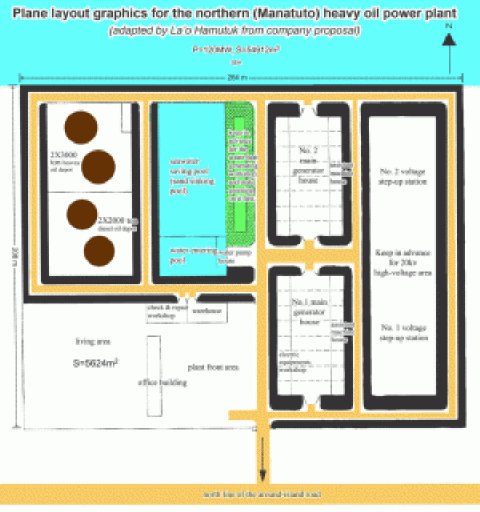
Fontes : Guvernu Timor-Leste | The November 2008 La'o Hamutuk Bulletin contains a short article on the Power Plant project, and the June 2009 Bulletin has a more comprehensive one. | Iha Buletin La'o Hamutuk fulan Novembru 2008 iha artigu badak kona ba projeitu plantasaun eletrisidade nian. | | The proposal from the Chinese company includes site layouts for power plants in Manatuto and Same (Manufahi). The Hera site is not included in the proposal, and the Manatuto site has since been downgraded from 120 to 90 megawatts. Click on a diagram to see it larger. 
| Proposta husi kompanha Xina inklui desenho ba fatin fabrika eletrisidade iha Manatuto no Same (Manufahi). Proposta ida ne'e la inklui fatin iha Hera, no fabrika iha Manatuto agora hatun husi 120 mw ba 90 mw. Cliick desenho ida atu hare boot liu. 
| 2009 Budget In late November 2008, the Council of Ministers approved and sent to Parliament a proposed State Budget for 2009, totaling $681 million, of which $590 million will come from the Petroleum Fund. This budget includes $85 million in Capital and Development expenditures for this power project during 2009, plus $160 million in 2010 and $120 million in 2011, for a total of $375 million (including the $10 million appropriated for 2008). It also includes $2 million each year from 2009-2011 for the Ministry of Infrastructure to supervise the project. Due to contract negotiations, $45 million of expenditures for this project which had planned for 2009 were reduced, including $30 million which was delayed to 2010, while reducing total, four-year project budget by $15 million. (In the 2008 mid-year budget, the power plant and grid had been budgeted at $10m for 2008, $130m for 2009, $130m for 2010, and $120m in 2011, for a total of $390 million.) The power project will cost 61% of Timor-Leste's total capital expenditure during 2009-2011. Click here for table of planned capital expenditures. La'o Hamutuk discussed this project in our submission to Parliament (also Tetum) on the proposed 2009 State Budget. On 21 January 2009, several NGOs presented a Petition to Parliament (also Tetum) asking them to reject this project, primarily on environmental grounds. After a heated debate, Parliament voted 38-23 along party lines not to shift the $87 million budgeted for this project to the State Secretariat on Energy Policy. | Orsamento Geral 2009 Iha loron ikus fulan Novembru 2008, Konselhu Ministru aprova no haruka ba Parlamentu Nasional proposta Orsamentu Geral Estadu 2009, hamutuk tokon $681, ne’ebé tokon $590 mai husi Fundu Petroleu nian. orsamentu ida ne’e inklui mos tokon $85 ba despeza ba iha projeitu eletrisidade iha kapital dezenvolvimentu nian durante 2009, aumenta tan tokon $ 160 iha 2010, total husi tokon $375 ( inklui tokon $10 apropriasaun 2008). Mos inklui tokon $2 kada tinan ida husi 2009-2011 ba Ministerio Infraestrutura atu bele tau-matan ba projeitu ida ne’e. Tuir negosiasaun kontratu, tokon $45 husi despezas ba projeitu ida ne’e, ne’ebé planea ba tinan 2009 hetan redusaun, inklui tokon $30 ne’ebé sei adia ba tinan 2010, nune'e hamenus montante, orsamentu projeitu tinan-haat nian iha tokon $15. (Iha orsamentu rektifikativu 2008, planta no rede eletrisidade iha ona hamutuk tokon $10 ba 2008, tokon $130 ba 2009, tokon $130 ba 2010, no tokon $120 ba 2011, total hamutuk tokon $390). Projeitu eletrisidade nia kustu mak 61% husi total kapital gastu Timor-Leste nian durante 2009 too 2011. Click iha ne'e atu haree tabela planu gastu kapital. La'o Hamutuk halo diskusaun ba projeitu ida ne’e iha ami nia submisaun ba Parlamentu Nasional (mos iha English) kona-ba proposta Orsamentu Geral Estadu 2009. Iha loron 21 fulan Janeiro 2009, ONG balun fo Petisaun ba Parlamentu Nasional (mos English) husu sira atu rejeita projeitu ne'e, uluk iha nivel ambiental. Depois de debate makaas, Parlamentu vota 38-23 hamutuk ho lina partidu atu la truka tokon $87 ne’ebé aloka ona ba projeitu ne'e ba Sekretaria Estadu Politika Enerjetika. | Excerpts from 2009 State Budget Book 1 Power is seen as an essential element of national development, of improved quality of life and improved public services. For this reason the Government has picked a major electricity development as the bellwether project for the Year of Infrastructure. In the last quarter of 2008 the Government signed a contract with a consortium to build major electrical generation facilities, one on the North Coast and one on the South, and a high voltage transmission line which will serve all districts except Oecussi. This national grid will, over time, be linked to most sizeable communities beginning with the major urban centers which already have an installed distribution system. Capital Development The Government has announced that 2009 will be the year of infrastructure. The capital plan (contained at Annex 4) shows the Government intends to invest in excess of $615.9 million in the period from 2009 to 2012. The major activity at a cost of $365 million over this period is the program to provide a stable and reliable electricity supply across the country. The provision of stable and regular electricity will be a key to developing industry and improving the lives of the Timorese. Timor-Leste will build two power plants, one in the north of the country, and one in the south. The northern power plant will be based in Manatuto with a capacity of 120 MW and the southern power plant will be based in Same and with a capacity of 60 MW. Schedules for completion of the Generation facilities are phased, with 90 MW generation capacity to be ready by end 2009 and the remaining capacity to be ready by end 2010. Additionally, ten transformer stations will be built across the country in Dili, Baucau, Liquica, Manatuto, Los Palos, Viqueque, Same, Maliana, Suai and Bobonaro. A total of 630 kilometres of overhead distribution lines will also provide for a national distribution. The current Dili power station will be used as a back up to secure power supply over the medium term. | Hasai husi Livru 1 Orsamentu Jeral Estadu 2009 Enérjia haré hanesan elementu importante ida husi dezenvolvimentu nasional, hodi hadia qualidade moris no servisu publiku nian. Tan razaun ne’e Governu hili dezenvolvimetu eletrisidade boot ida hanesan projeitu Bellwether ba tinan infrastrutura nian. Iha trimestral ikus 2008 governu asina kontratu ida ho kompaña atu hari`i fasilidade gerasaun eletrisidade boot iha Kosta Norte no ida iha Kosta Sul, no liña transmisaun voltagen boot ne’ebé sei kobre distritu hotu exkluindu Oecusse. Rede nasional ne’e sei, loron tomak, ligadu ba komunidade lubuk balun no sidade sira ne’ebé iha ona instalasaun sistema distribusaun. Kapital Dezenvolvimentu Governu anunsia ona katak 2009 sei sai hanesan tinan infrastrutura nian. Planu kapital (hare iha Anexu 4) hatudu katak guvernu iha intensaun atu investe barak tokon $615.9 liu iha periodu husi 2009 too 2012. Aktividade boot liu ho kustu tokon $365 durante periodu ne’e mak programa atu fornese eletrisidade ne’ebé stavel no seguru iha nasaun tomak. Provisaun eletrisidade ne’bé stavel no regular sei sai zave ida atu dezenvolve industria no hadi’ak Timorense nia moris. Timor-Leste sei harí fabrika eletrisidade rua, ida iha parte Norte no ida seluk iha parte Sul, febrika iha Norte sei hatidin iha Manatutu ho kapasidade Megawat 120 no fabrika iha Parte Sul sei hatidin iha Same ho kapasidade Megawat 60. Orariu atu kompleta fasilidade eletrisidade halo tiha ona nia faze, ho Megawat 90 kapasidade jenerasaun sei prontu iha tinan 2009 no kapasidade sira seluk sei ramata iha tinan 2010. Adisionalmente, estasaun transformador sanulu sei harí iha nasuan tomak iha Dili, Baucau, Liquica, Manatutu, Lospalos, Viqueque, Same, Suai no Bobonaro. Total husi kilometru 630 husi liña distribuisaun ne’ebé sai aumenta sei mos fornese ba distribusaun nasional. Estasaun enerjia Dili nian agora ne’e sei uza ajuda hodi asegura fornesementu enerjia iha. | U.S. and World Bank urge cancellation of CNI22 contract In August 2011, Wikileaks published 300 leaked U.S. State Department cables about Timor-Leste, including a 31 December 2008 cable from their Dili Embassy to Washington on Major Projects And Government Procurement. Ambassador Klemm expressed many of the same concerns that La'o Hamutuk had been raising about the national electricity project: “[F]undamental shortages of planning, engineering and organizational skills in Timor's public and private sectors have hindered improvements in the implementation of even minor capital projects. Recent decisions by Timor's government on the procurement of new patrol boats and the installation of two power plants raised serious questions regarding the transparency of Timor's procurement practices and the quality of its decision-making. … "In July 2008, news surfaced that the government would purchase two large electricity generating plants from a Chinese firm that would also be contracted to put into place a nationwide transmission grid. On this occasion, the government issued an international tender, although the widespread understanding in Dili was that the purchase had been agreed before the government announced the tender. Although observers described the tender announcement as insubstantial and technically inadequate, fourteen international firms submitted bids. The decision to award the contract to the Chinese firm again was made by the prime minister with very little consultation with line ministers. The power plants are old equipment (with some 40 years of service in China already behind them) that will be dissembled, exported and refitted in Timor-Leste. They will burn heavy oil that Timor will have to import. Experts describe the contracted installation of a national transmission grid within two years as a fantasy. The World Bank reportedly has urged the government to cancel the contract, absorb the penalty, and re-tender the project. There is no indication that the government intends to follow this advice." Nearly a year later, the Government accepted much of this advice, replacing the second-hand generators with new ones (at a significant cost increase). In late 2010, the power plant contract was taken away from the Chinese company and awarded to a newly-created Indonesian company, which will purchase the equipment from Finland.) | Estadus Unidus no Banku Mundial husu atu kansela kontratu CNI22 Iha Agustu 2011, Wikileaks publika sai kabela eletroniku husi Departamentu Estadu Estadus Unidus, inklui kabela eletroniku iha 31 Dezembru 2008 husi Embaixada Dili ba Washington kona-ba Projeitu Boot sira no Aprovisionamentu Governu nian. Embaixador Klemm ekspresa preokupasaun barak ne’ebe hanesan ho saida mak La’o Hamutuk durante ne’e foti kona-ba projeitu eletrisidade nasional: “Planu, enjineira no kapasidade organizasaun fundamental ne’ebe fraku iha seitor publiku no privadu Timor-Leste difikulta tiha melhormantu implementasaun projeitu kapital minor sira. Desizaun atual husi Governu Timor-Leste ba aprovisionamentu ba roo funu rua no instalasaun sentral eletrika rua hamosu kestaun ne’ebe seriu relasiona ho transparensia ba pratika aprovisionamentu Timor nian no kualidade husi foti desizaun. ... "Iha Julho 2008, iha notisia katak Governu sei hari sentral eletrisidade boot rua husi kompania Xineza ne’ebe mos sei kontrata atu hari rede transmisaun ba teritoriu tomak. Iha okaziaun ida ne’e, governu fo sai tenderizasaun internasional ida, maske iha ema barak iha Dili komprende ona katak kontratu ne’e hetan tiha ona konkordansia molok governu anunsia tenderizasaun. Maske observador sira hateten katak anunsiamentu ba tender nian ne’e laiha substansia no teknikamente la adekuadu, iha kompania internasional sanulu resin hat mak hatama sira nia aplikasaun ba tenderizasaun. Desizaun atu fo kontratu ba kompania Xineza ne’e dala ida tan halo husi Primeiru Ministru ho ladun iha konsultasaun diak ho linha ministerial. Ekipamentu ba sentral eletrika ne’e tuan tiha ona (uza tiha ona durante tinan 40 iha Xina molok ne’e)ne’ebe sei taka, eksporta no atu hari fali iha Timor-Leste. Jerador sira ne’e sei uza oleo pezadu ne’ebe Timor-Leste tenke importa. Peritus sira hateten kontratu ba instalasaun linha transmisaun nian durante tinan rua nia laran nudar fantasia ida. Banku Mundial nia relatoriu husu ba governu atu kansela tiha kontratu, simu penalti, no halo tenderizasaun foun ba projeitu. Maibe laiha indikasaun katak governu hakarak atu tuir konselu ida ne’e." Hafoin besik tinan ida, Governu simu barak husi konselu ne’e, troka jerador segundu maun ho jerador foun (ho kustu ne’ebe sae maka’as). Iha fin de 2010, kontratu sentral eletrika nian ba kompania Xineza kansela tiha no entrega fali ba kompania foun ne’ebe foin hari husi Indonezia, ne’ebe sei sosa ekipamentu husi Finlandia. | Excerpt from Prime Minister's budget speech to Parliament, 14 January 2009 A stable and regular supply of electricity is vital for developing industry and improving the lives of the Timorese. Timor-Leste will build two power plants, with staged schedules for completion. It is estimated that by late 2009 all districts will have power 24/7, and that by late 2010 this will be extended to all sub-districts. In addition to enabling the development of many other employment-generating sectors, this project will in itself create over 20 thousand jobs already in 2009. | Hasai husi diskursu Primeiro Ministru nian kona ba orsamento ba Parlamentu, 14 Janeiro 2009 Provizaun eletrisidade ne’ebé estável ho regulár, esensiál tebes atu dezenvolve indústria no hadi’a timór-oan sira nia moris. Timór-Leste sei harí sentrais elétrikas rua, i kalendárius ba konkluzaun instalasoens jerasaun eletrisidade sei hala’o tuir fazes, ho prevê katak to’o finais 2009 distritus hotu-hotu iha ona eletrisidade, loroloron durante 24 oras, no to’o finais 2010, alarga ba to’o ona sub-distritus tomak. Projetu ida ne’e, alein-de permite dezenvolvimentu iha setores barak ne’ebé bele kria empregu, nia rasik bele kria 20 mil postus trabalhu iha 2009. | Excerpt from President Ramos-Horta's speech to UN Security Council, 19 February 2009 In the 2009 budget, $205 million was allocated for major capital development projects, including the building of a new national electricity project to provide reliable and cheap electricity to the whole country within two or three years. This is a heavy-fuel-based power plant with new transmission lines that can be switched to gas and wind power. However, we believe that, even if we are able to operate with gas and wind energy, Timor-Leste will continue to need supplemental support in the form of heavy-fuel-based energy. There will be strict monitoring to ensure that the project will be in full compliance with World Bank environmental standards and the Kyoto Protocol. An international tender will be announced shortly for an independent consultant to oversee the implementation of the project in all its technical aspects as well as in terms of environmental impact. | Hasai husi diskursu Presidente Ramos-Horta ba Conselhu Seguransa ONU nian, 19 Fevereiru 2009 Iha Orsamentu 2009, aloka ona tokon $205 ba projeitu dezenvolvimentu kapital, inkluindu hari projeitu eletrisidade nasional atu fornese enerjia ne’ebé baratu no bele depende ba iha nasaun tomak iha tinan rua ka tolu nia laran. Ida ne'e planta oleu pezadu ida ho lina transmisaun ne’ebé bele truka fali ba energia gas no anin. Maibe ami fiar katak, maske karik ami bele opera ho enerjia gas no anin, Timor-Leste sei kontinua presiza apoiu balun seluk iha forma enerjia oleu pezadu. Nune'e sei iha monitoriamentu makas hodi asegura katak projeitu ne'e sei tuir dunik deit standar ambiental Banko Mundial no Protokolo Kyoto. Tenderizasaun Internasional ida sei fo sai iha tempo badak ba konsultan independete ida atu tau-matan ba implementasaun projeitu iha aspeitu tekniku nune'e mos iha termu impaktu ambiental. |
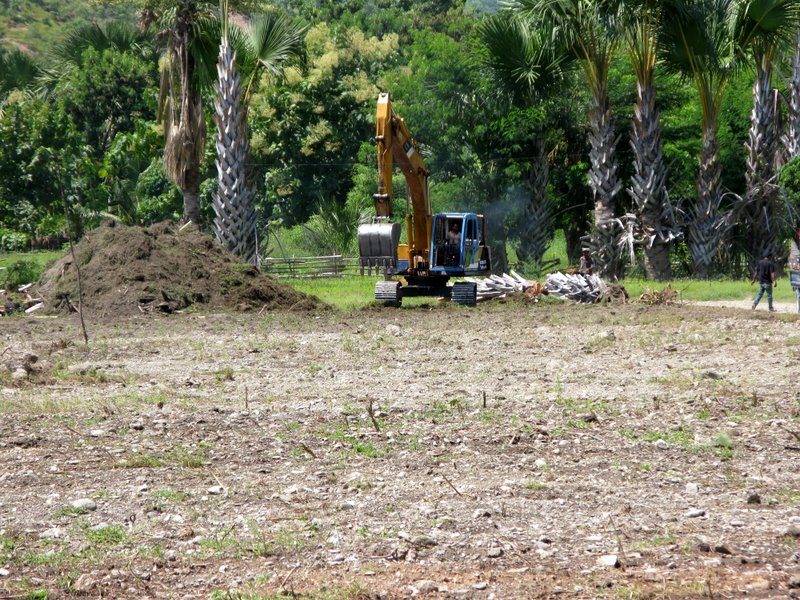
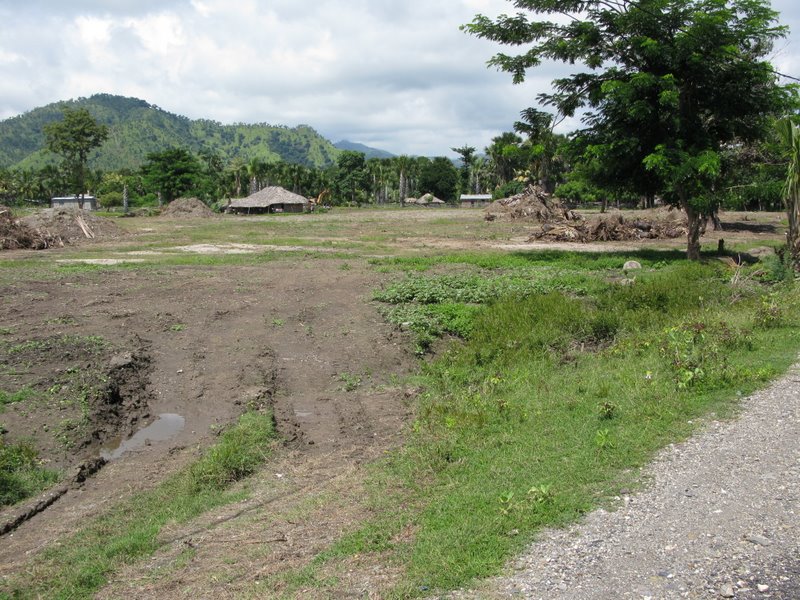
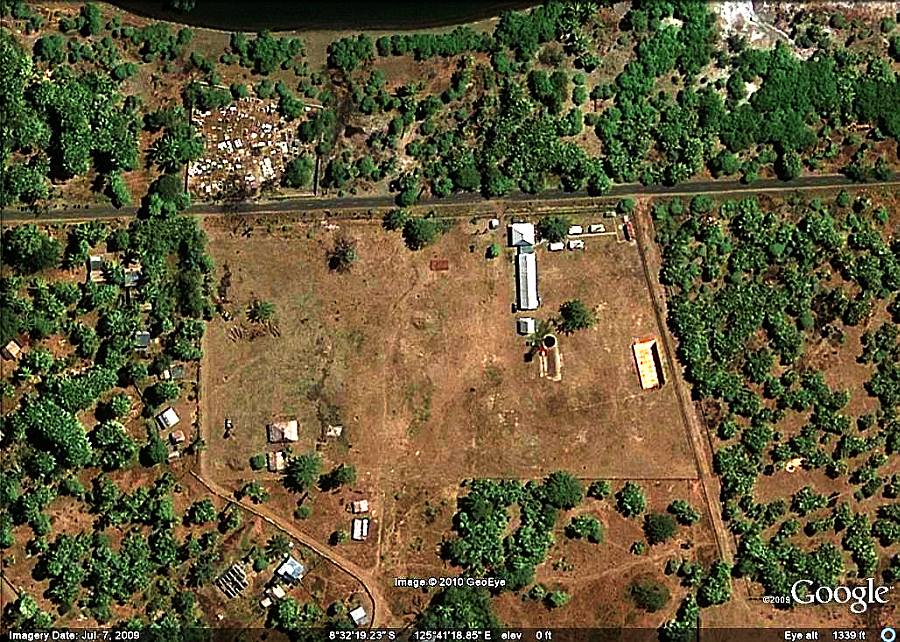
Excerpts from President Ramos-Horta's speech to National Parliament, 17 March 2009 Any decisions on the necessary investments in infrastructures will have a long-lasting impact on our society and should therefore be thought through carefully and be the object of a consensus that is as broad as possible . In the State Budget for 2009 that you, Distinguished Members of Parliament, have recently adopted on a proposal from the Government, the allocation of 30% of budgeted expenditure to capital development is indeed very positive and encouraging. But the largest project that was put forward was also the one that generated the most heated controversy. This shows how important it is to provide more information and to ensure greater transparency when debating and voting on projects of national importance. I recall, in this regard, the purchase in 2008 of two vessels for the naval component of the F-FDTL. It was a significant investment that will have a significant impact in the future, and more information should have been provided and there should have been greater transparency to ensure as broad as possible a consensus around the decision. Whenever essential investments for national development are at stake, we should seek to generate the broadest consensus possible. If we really want to bring about change, the necessary investments will have to be pursued for many years to come, supported by steady policies and clear objectives – and not just be included in the budget for one or two years. Over the next 10 years, the State will have to secure the funds to finance large projects which are essential for our development – such as the building of a new airport (at an estimated cost of US$700 million), a new port (estimated cost US$300 million) and a modern road network (estimated cost between US$1 and US$2 billion), as well as other national infrastructures such as energy supply and telecommunication networks. The necessary investments are huge and we should work towards building the broadest possible consensus around these major works of national interest. The larger and more important such projects are, the more vital it is to build and broaden a NATIONAL CONSENSUS around them. ENVIRONMENT AND ENERGY POLICIES The debate around the State Budget for 2009 was marked by the discussions around a new power plant and the environmental hazards that it could represent. Risks to public health and negative impacts on agriculture were mentioned. The project of a new power plant drew the strongest criticisms from the opposition which raised some serious concerns that have to be addressed. The President of the Republic shares many of those concerns, including those that were expressed by civil society regarding the technology to be used, its environmental impact, the costs involved and the reciprocal arrangements that were negotiated with the company to whom the contract was awarded. I heard the explanations from the Government and I have full confidence in their integrity. I know that environmental concerns where also on the mind of Government representatives as they negotiated with the chosen company. One of the requirements that the company will have to meet is a plan with technical measures aimed at reducing and preventing negative environmental impacts. Such plan is an integral part of the agreement signed and the company has vowed to respect World Bank standards as well as those of the Kyoto Protocol and the environmental legislation in force in Timor-Leste. I congratulate the Government for having allocated a sum of US$2 million to recruit a team of consultants that will supervise the works. The team will also include environmental experts. However, and with the Government’s support, I decided to request the assistance of an independent body that will carry out an environmental impact assessment and a technological evaluation to determine the risks that the project poses to the environment. The Prime Minister has given me assurances that he will accept whichever recommendations are produced by this independent body. I have accepted the explanations and assurances provided by the Prime Minister that the Government will be meticulous and transparent in the management of the works. The Prime Minister has assured me that he will not hesitate and take the necessary measures to defend the interests of the people, should their be any infringements to the terms of the contract. I would also like to draw your attention that we are already in mid-March and the works haven’t started yet, despite the urgency of the project and the Government’s commitment to have the plant up and running to supply the districts by the end of the year. [Australian newspapers reported the President's comments to mean that he was suspending the project until an environmental impact assessment is performed; this is not correct. The President's statement that works haven't started is also wrong; when he gave his speech, land clearing at the Hera plant site had been in process for more than a month.] | Hasai husi diskursu Presidente Ramos-Horta ba Parlamentu RDTL, 17 Marsu 2009 (Port.) Todas as decisões sobre o investimento necessário em infra-estruturas afectam o futuro da nossa sociedade por muitos anos e, por isso, devem ser ponderadas de forma séria e devemos construir o consenso mais alargado que for possível, sobre essas decisões. Na Lei do Orçamento do Estado para 2009, que as senhoras e senhores deputados aprovaram recentemente, por proposta do Governo, considero muito positivo e encorajador o montante destinado ao capital de desenvolvimento – correspondendo a 30% da despesa total orçamentada. Mas o maior projecto proposto foi o projecto que gerou mais controvérsia, o que mostra a necessidade de mais informação e de mais transparência na discussão e na votação de projectos de importância nacional. Recordo, a propósito, a aquisição realizada em 2008 de dois navios destinados à componente naval das F-FDTL. Tratou-se de um investimento importante, que tem impacto no futuro, e devia ter havido sobre ele mais informação e mais transparência para se gerar um consenso o mais alargado possível. Tratando-se de investimentos em projectos essenciais ao Desenvolvimento nacional, considero que devemos procurar sempre estabelecer consensos alargados sobre esses projectos essenciais. Para ter resultados, o investimento necessário terá de manter-se com firmeza e com clareza de objectivos, durante muito tempo – e não se limitar só ao orçamento de um ou dois anos. Nos próximos 10 anos, o Estado tem de mobilizar fundos para financiar grandes projectos indispensáveis ao Desenvolvimento – como a construção de um novo Aeroporto (custo estimado de US$700 milhões), um novo Porto (custo estimado de US$300 milhões) e uma rede de estradas moderna (custo estimado de US$1 a US$2 biliões), entre outras infra-estruturas de âmbito nacional, da energia às telecomunicações. O investimento necessário é elevado e devemos trabalhar para alargar o consenso sobre como realizar estas obras de grande interesse nacional. Quanto maior a importância dos projectos, mais importante é construir e alargar o CONSENSO NACIONAL sobre eles. POLÍTICA AMBIENTAL E ENERGÉTICA O debate sobre o orçamento do Estado para 2009 ficou marcado pelo projecto de construção de uma nova central eléctrica e dos problemas ambientais que pode gerar. Foram referidos os perigos para a Saúde pública, foram invocadas consequências para a Agricultura. O projecto de construção da nova Central Eléctrica foi o alvo principal das críticas da oposição que apresentou preocupações sérias às quais importa responder. O Presidente da República partilha muitas dessas preocupações, incluindo as que foram manifestadas pela sociedade civil, sobre a tecnologia escolhida, o seu impacto ambiental, os custos envolvidos e as contrapartidas negociadas com a empresa a quem foi outorgada a obra. Ouvi as explicações do Governo e confio totalmente na sua integridade. Sei que as preocupações com o Ambiente guiaram também o Governo nas negociações com a empresa escolhida. Uma das exigências feitas à referida empresa é a organização de um plano com medidas técnicas para reduzir e prevenir os impactos ambientais negativos. Neste plano, que é parte integrante do acordo, a empresa compromete-se a respeitar os Standards do Banco Mundial e do Protocolo de Kyoto, bem como as leis ambientais em vigor em Timor-Leste. Felicito o Governo por ter decidido incluir US$2 milhões para contratar uma equipe de consultores para fazerem a supervisão da obra. Esta equipa terá de ter competências também na área ambiental. No entanto, com apoio do Governo, decidi chamar uma entidade independente para realizar um estudo sobre o impacto ambiental, incluindo uma análise tecnológica, para avaliar o risco para o Ambiente. O Senhor Primeiro-Ministro disse-me que aceitará as recomendações desta entidade independente. Aceito as explicações e garantias do Senhor Primeiro-Ministro de que o Governo irá agir com grande rigor e com grande transparência no processo de execução da obra. O Senhor Primeiro-Ministro disse-me que não hesitará em tomar as medidas necessárias para defender os interesses do povo, caso não os compromissos assumidos no contrato não sejam cumpridos. Chamo também a atenção para o facto de estarmos já em meados de Março e de esta obra não ter sido ainda iniciada, apesar da urgência que ela requer e do compromisso do governo de a ter pronta e a funcionar para os distritos até ao fim do ano. [Jornal Australia rua hatete katak diskursu Presidente nian signifika katak nia hapara projeitu to'o availasaun ambiental remata; ida ne'e la los. No mos statement Presidente nian kata projeitu seidauk hahu sala; hamos rai iha Hera komesa ona iha loron 19 fulan Fevereiru.] | On 24 February 2009, the Timor Post newspaper published a letter from La'o Hamutuk explaining that questions about this project from civil society groups does not mean that those groups support the opposition or are against the Government. On 27 February 2009, the Ministry of Finance invited proposals for the Construction Supervision Works of the Nationwide Electrical Power Grid and Power Plant and its Facilities, with bids due by 31 March. The tender includes the following documents: On 3 March 2009, La'o Hamutuk released the information on this page, including the proposal from the company, to the public and the media. On 25 March, Charles Scheiner wrote a letter to the Ministry of Finance asking for information to help find a qualified company for this contract, but no answers were forthcoming. In July 2009, the Government awarded an $8.6 million contract to the Italian joint venture Electroconsult and Bonifica to supervise the project for the next two years (although the budgetary allocation for this task is only $2 million per year). On 23 April, Rui Miguel da Silva Pinto formally requested the Provedor (Ombudsman) for Human Rights and Justice to open an investigation regarding possible maladministration or negligence in the contracting and beginning of construction of the Hera generating station and to verify information in the public tender process. The request also asks how construction could start without the legally-required environmental impact analysis. | Iha loron 24 fulan Fevereiru 2009, jornal Timor Post publika ona karta ida husi La'o Hamutuk esplika katak diskusaun kona-ba projeitu ida ne'e husi sosiedade civil la signifika katak NGO balu apoiu oposisaun ka kontra Governu. Iha loron 27 fulan Fevereiru 2009, Ministeriu Finansas RDTL konvita proposta ba konsultan atu tau matan ba projeitu ida ne'e. Kompanha ho interese tenke haruka sira nia bid molok loron 31 fulan Marso. MF fo sai dokumentu tuir mai: Iha loron 3 fulan Marsu 2009, La'o Hamutuk fo sai informasaun iha pajina ida ne'e, inklui proposta husi kompanha, ba publiku no media. Iha loron 3 fulan Marsu, Charles Scheiner hakerek karta ba Ministeriu Finansas buka informasaun atu ajuda Ministeriu ne'e hetan konsultan diak ba kontraktu ida ne'e, maibe MF seidauk resposta. Iha Julho 2009, Governu fo kontratu tokon $8.6 ba kompania konsorsiu ida husi Italia, Electroconsult and Bonifica atu supervisina projeitu ne’e ba tinan rua (maske orsamentu estadu aloka deit tokon $2 kada tinan ba servisu ne’e) Iha loron 23 fulan Abril, Rui Miguel da Silva Pinto fo rekerimentu formal ba Provedoria Direitos Humanos e Justiça hodi hala’o investigasaun kona-ba 1) posivel má-administrasaun no neglijénsia iha prosesu lisenseamentu no inisiu da obra ba sentrál elétriku iha Hera no 2) prosesu verifikasaun informasaun iha konkursu públiku. Rekermentu ida ne'e mos husu oinsa bele hahu konstrusaun, bainhira seidauk halo availasaun meiu-ambienta nebe tenke iha tuir lei aplika ona iha Timor-Leste. | Construction 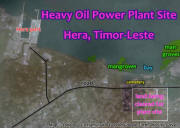 Land clearing began at the Hera power plant site during the second week of February 2009, and local residents were told to relocate. Click on the satellite photo at right to see it bigger. Land clearing began at the Hera power plant site during the second week of February 2009, and local residents were told to relocate. Click on the satellite photo at right to see it bigger.
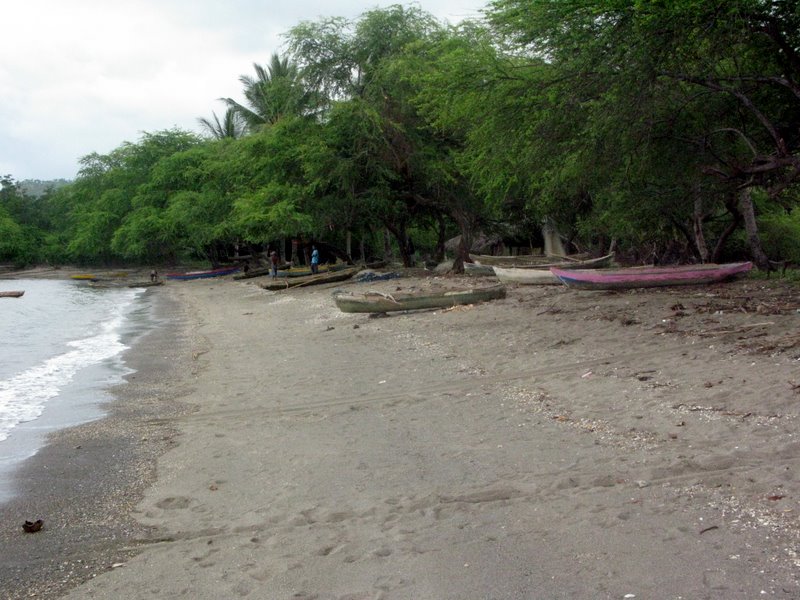
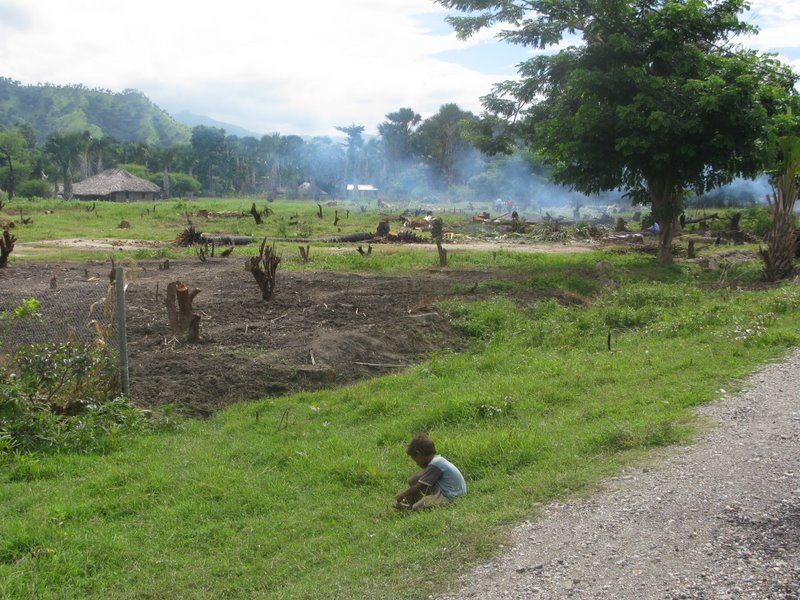
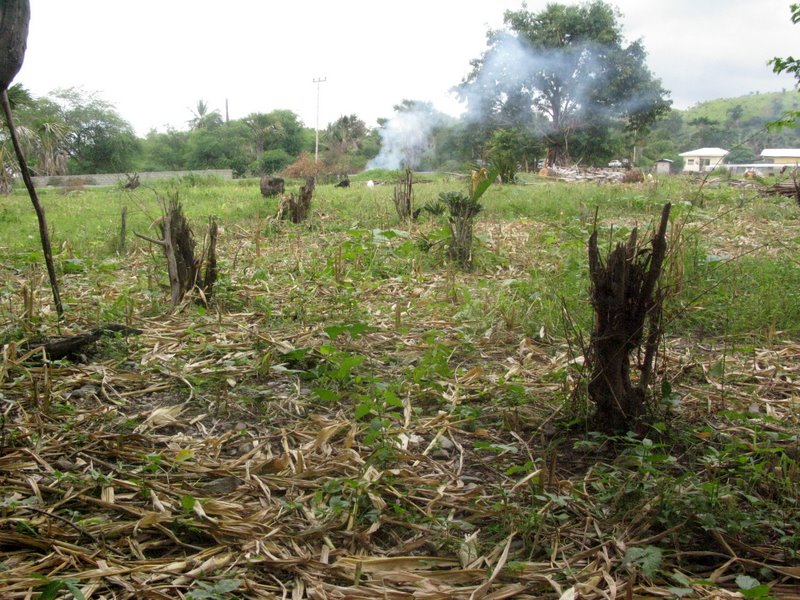
The first photos below were taken on 19 February. Click on one to see it larger. 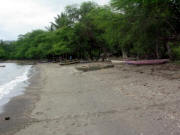 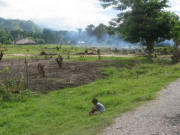 |
KonstrusaunHamos fatin plan enerjia komesa ona iha Hera durante semana segundu iha fulan Fevereiru 2009, no rezidente sira haruka ona atu muda husi sira-nia fatin. Klik foto satelit iha liman karuk atu hare imazem ho boot. Bele hatene fatin iha foto liman karuk. Click ne'eba atu hare'e boot liu. Foto haat iha kraik no karuk hasai ona loron 19 Fevereiru 2009. Click iha foto ida atu hare'e boot liu.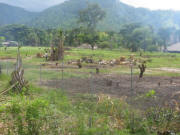 
| | Photos taken 17 March 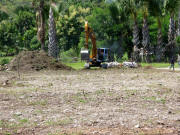 
| Photo hasai iha loron 19 Abril 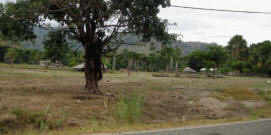
| | On 7 July, the cleared site was obvious in this satellite photo from Google Earth: Iha 7 Julho, hamos fatin ne’e momos husi foto satelit husi Google Earth: | 
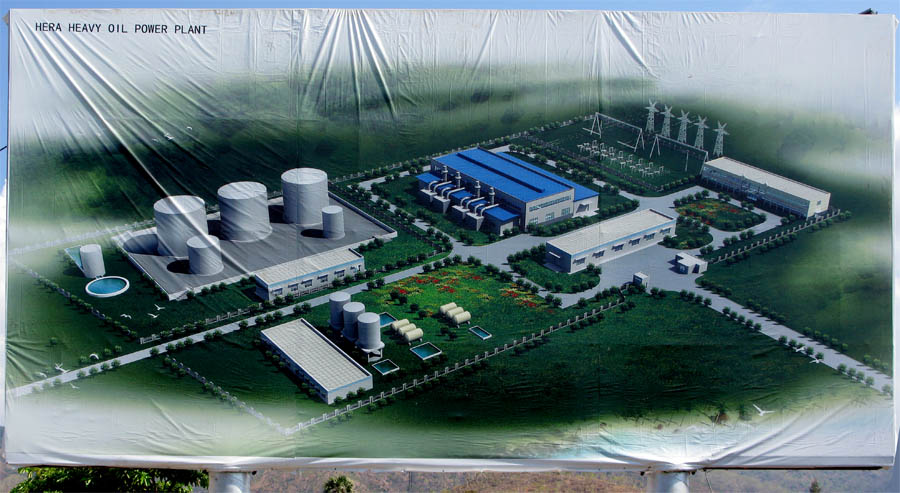
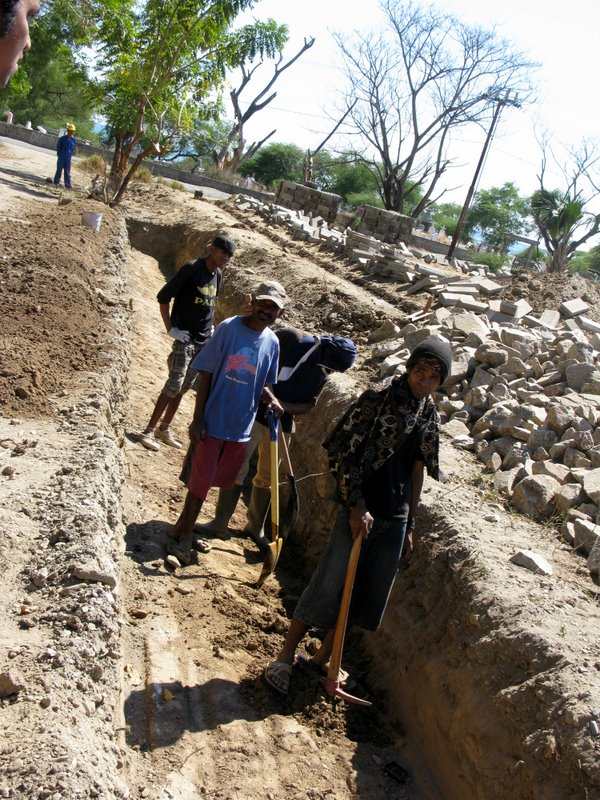
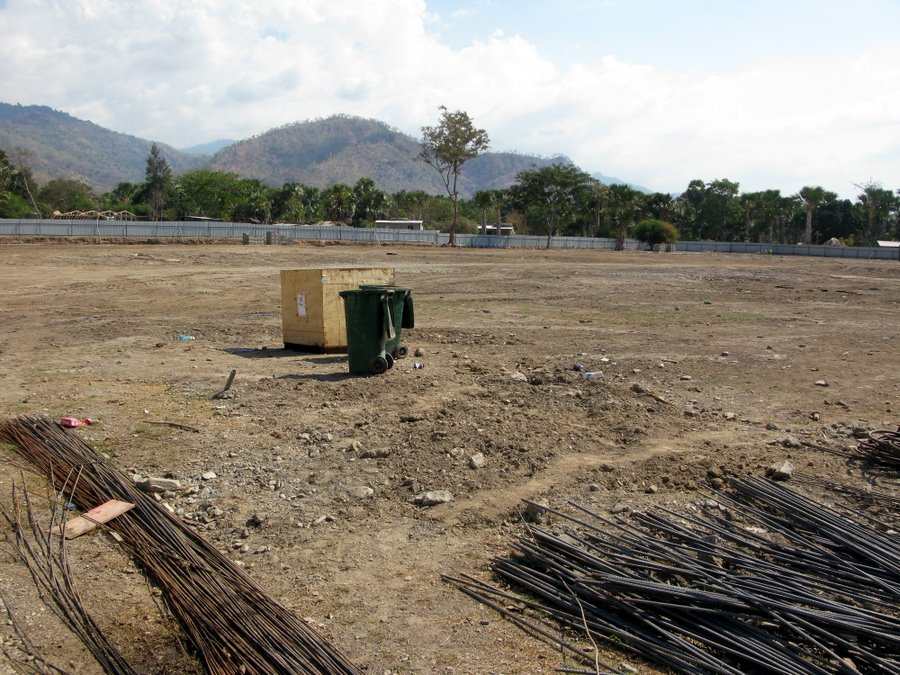
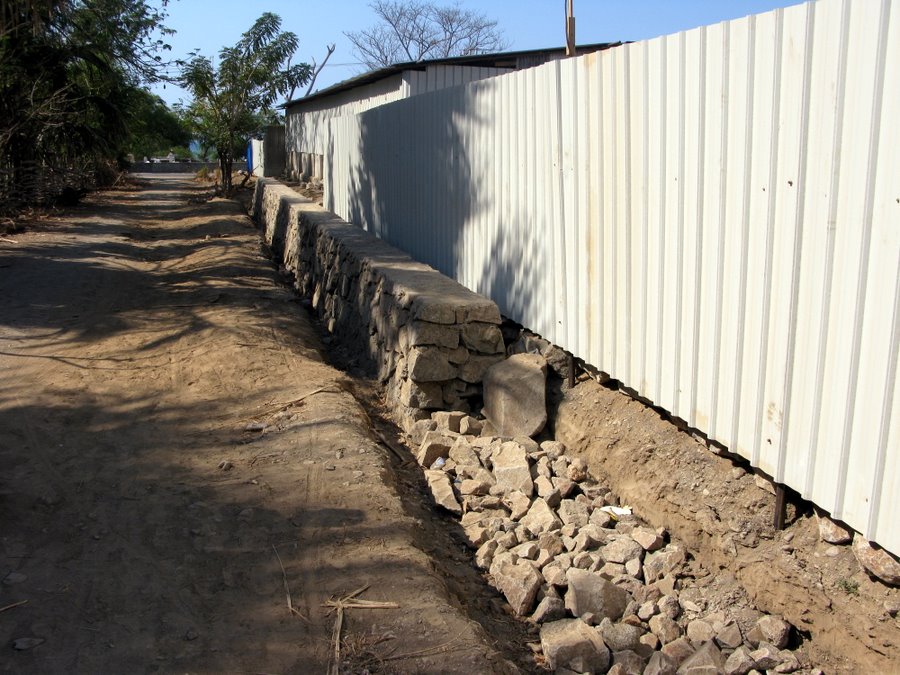
| | In early August 2009, the following banner was erected at the Hera site, and Timorese workers began building walls along the site boundary, and earthworks within the site. | Iha inisiu fulan Agustu 2009, spanduk tuir mai harii iha fatin Hera, no trabalhadores Timor-oan sira hahu hari'i parede projeitu ne'e haleu baliza fatin, no servisu ke'e rai iha fatin neba. | 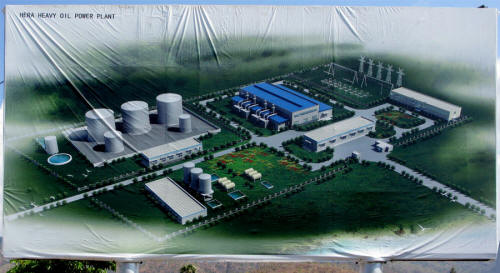  Click for a more recent (January 2010) rendering of the plant design Click iha ne'e atu hare'e grafiku foun liu kona-ba dezenho sentral eletrisidade Hera. | | Work on the Hera project stopped a few weeks later, and the Government reallocated $70 million from the Heavy Oil Project to the "Referendum Package" of local infrastructure projects. By late September, the Government has not publicly mentioned any problems with the heavy oil project, although some were discussed in October. However, people involved with the project tell La'o Hamutuk that the suspension is temporary, to correct errors made by the contractor, and that work will resume shortly. | Servisu iha projeitu ne'e para depois semana balun tuir mai. La'o Hamutuk simu informasaun katak Governu realoka ona osan tokon $70 husi Projeitu Oleu Pezadu ba "pakote referendum" projeitu infrastrutura lokal ninian. Iha semana ikus Setembru, Governu seidauk fo sai ba publiku kona ba problema ruma mosu ba projeitu oleo pezado. Maibe, ema ne'ebe involve ho projeitu ne'e hateten ba La'o Hamutuk katak hapara ne'e temporariamente deit, hodi hadia sala ne'ebe halo husi kontrakto, no sei hahu servisu fali iha tempu badak. |  |  | On 22 September, the Hera site was empty of workers, as it had been for several weeks. A stone wall surrounding the site was left unfinished. | Iha loron 22 Setembru, fatin Hera ne'e laiha trabalhadores, hanesan ne'e ba semana balun nia laran. Parede fatuk ne'ebe haleu ba fatin ne'e seidauk remata. |  2010 budget 2010 budget
See La'o Hamutuk's submission to Parliament on the 2010 State Budget for an analysis of how the budget for this project has been unrealistically slashed, but not cancelled. Haree submisaun La'o Hamutuk nian ba Parlamentu kona ba Orsamentu Estadu 2010 atu hetan analiza ba oinsa alokasaun ba projeitu ne'e tun makaas, maibe seidauk kansela. | Project redesigned On 4 November 2009, the Prime Minister wrote a letter to Parliament (Portuguese original) explaining problems with the project and indicating that a major redesign is in process. The new version will use new generators (rather than second-hand ones) and other fuels, and will have more generating capacity and longer transmission lines. It is not yet clear how much more it will cost or how it will be paid for, although borrowing from China appears likely. Press releases from the Government and the Fretilin opposition gave different spins on the decision. The Government responded to Fretilin's release. During the third quarter of 2009, the allocation for this electricity project in the already-enacted 2009 state budget was decreased from $87 million to $17 million, with $70 million shifted to the Secretary of State for Public Works for hundreds of small-scale Pakote Referendum projects. See Budget Execution Report, page 42. On 15 January 2010, RDTL officials and CNI22 laid the cornerstone for the Hera generating station and revealed some additional information about the project design. Click here for relevant developments in 2010 and beyond. | Alterasaun ba projeitu Iha loron 4 Novembru 2009, Primeiru Ministru haruka ona karta ba Parlamentu Nasional (Port.) (mos Ingles) atu esplika problema ruma ho projeitu oleu pezadu, no fo hatene katak sira atu halo alterasaun boot. Desenho foun sei uza jerador foun (laos makina tuan), no bele uza kombustivel seluk. Atu aumenta kapasidade atu produz electrisidade, no halo linha transmisaun naruk liu. Ita seidauk hatene folin projeitu foun, no iha probabilidade katak Governu atu impresta osan husi China. Komunikadu imprensa husi Governu and the oposisaun Fretilin hatudu perspetiva la hanesan kona ba desizaun ida ne'e. Governu resposta ba Fretilin. Durante trimestre terseiru tinan 2009, alokasaun ba projeitu eletrisidade iha OJE 2010 tun husi tokon $87 too tokon $17, no tokon $70 aloka ba Secretariado Estado Obras Publikus ba projeitu kiik barak naran Pakote Referendum Hare relatorio Ezekusaun Orsamentu Estado, pagina 42. Iha loron 15 Janeiro 2010, nai ulun sira husi RDTL no CNI22 tau fatuk dahuluk ba konstrusaun Sentral Electrisidade iha Hera, no fo sai informasaun tan kona ba desenho projeitu ida ne'e. Hili iha ne'e atu le'e kona ba akontesementu relevante iha tinan 2010 no tuir mai. |
|